
Do you constantly feel fatigued, even after a full night's sleep? Do you feel heavy and bloated after meals? Were your liver values slightly elevated on your last blood test? Then keep reading — this article could fundamentally change your understanding of liver health.


I hear this sentence in my practice almost every day. Mike was one of many: 54 years old, slightly overweight, under pressure at work. He sat across from me, visibly exhausted.
"My internist found elevated liver values at my last checkup — ALT and GGT. He told me to drink less alcohol and eat healthier. I've been doing that for four months now. And yet I'm constantly tired, my stomach feels bloated, and my numbers have barely improved."
Mike's frustration was understandable. And it's typical.
In my over 12 years of clinical practice as a gastroenterologist, I see more and more patients with a similar pattern:
 Persistent exhaustion that sleep doesn't resolvePressure in the upper right abdomen, especially after fatty mealsBloating and sluggish digestion, despite an improved dietSlightly elevated liver values (ALT, AST, GGT) on blood workSkin problems and itching with no identifiable dermatological causeBrain fog and lack of motivation despite adequate sleep
These symptoms are often dismissed as "normal aging" or stress. But in reality, they are warning signs of an overburdened liver — one of the most important and most underestimated organs in the human body.
The liver is the body's central detoxification organ. It filters over 1,700 liters of blood every day, produces bile acids for fat digestion, regulates blood sugar, and synthesizes essential proteins.
But our modern lifestyle is increasingly overloading it:
 Processed foods loaded with trans fats, sugar, and preservativesChronic stress and the associated cortisol burdenRegular alcohol consumption — even moderate amounts cause cumulative damageMedications and supplements that are metabolized through the liverSedentary lifestyle, which slows bile flowAdvancing age, which reduces the liver cells' regenerative capacity
According to current epidemiological data, non-alcoholic fatty liver disease (NAFLD) is now the most common chronic liver disease worldwide — with an estimated prevalence of 25 to 30% in the adult population of Western countries. In the United States alone, nearly 100 million Americans are affected.[1]
The truly alarming part: most people who have it don't even know.
When Mike told me about his four months of dieting and cutting out alcohol, I wasn't surprised. I hear this story constantly. And I understand why the standard recommendations so often disappoint.
Detox teas and cleanse programs: They give a short-term sense of control. But they don't deliver effective concentrations of the plant compounds that actually support liver cells at a cellular level. After a few days, the effect has faded.
Milk thistle tea: The potential of milk thistle is real — but in tea form, it's virtually ineffective. The active compound silymarin is water-insoluble. It barely dissolves in hot water, is poorly absorbed, and doesn't reach the liver cells in sufficient concentration. Only a standardized dry extract delivers reliable active compounds.
Green smoothies and vegetable juices: Healthy — no question. But even daily consumption doesn't reach the therapeutically relevant doses of plant compounds that can regenerate liver cells.
Fasting and juice cleanses: They provide temporary relief. But damaged liver cells don't need a break — they need active building blocks for regeneration.
Off-the-shelf liver supplements: Many products on the market contain either just a single active ingredient — usually milk thistle — or combine multiple ingredients in insufficient doses. But the complexity of liver problems demands a multi-dimensional solution.
This frustrates me as a physician. Because all these patients are genuinely trying — they're doing what they've been told. And yet the breakthrough never comes.
To understand why conventional measures fail, we need to understand what's actually happening at the cellular level.
In a chronically overburdened liver, three destructive processes occur simultaneously:
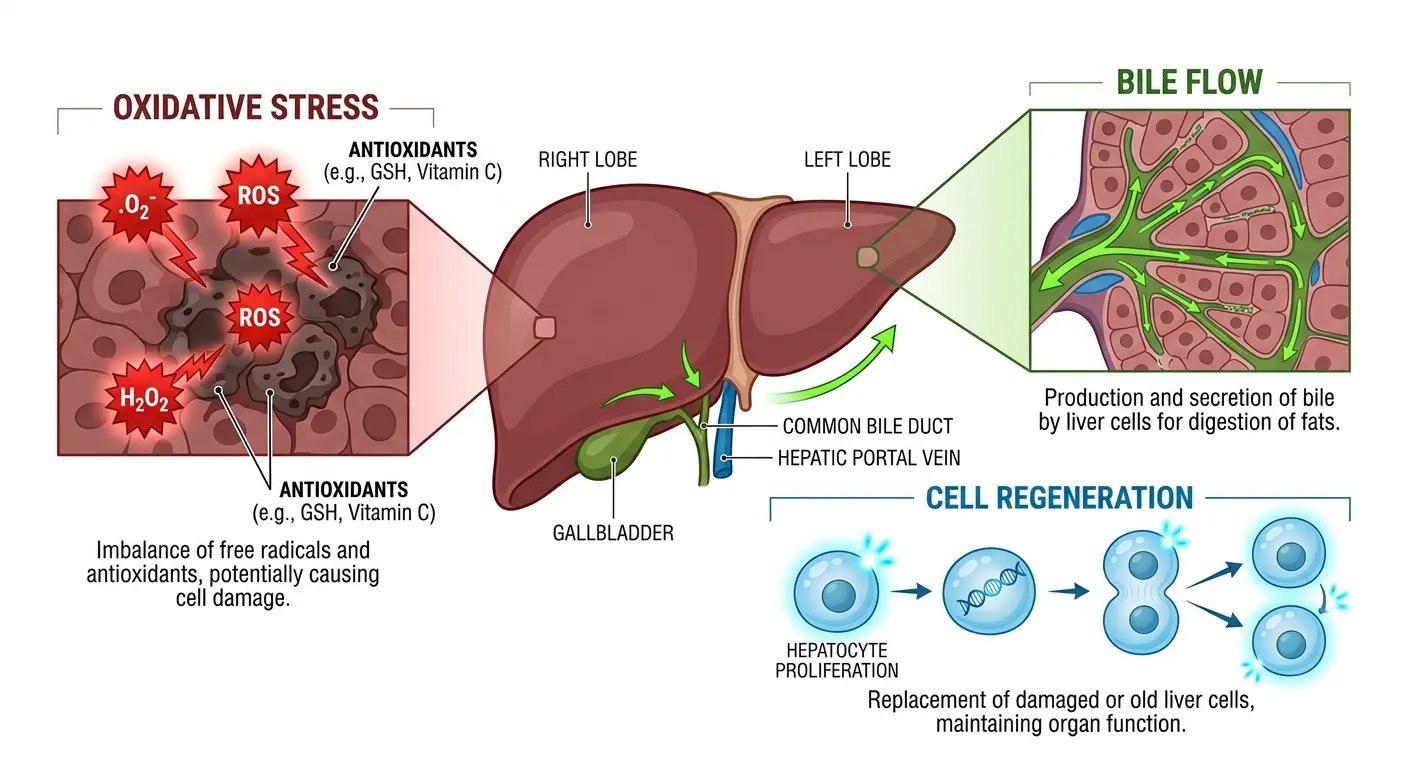
Due to overload, liver cells produce excess free radicals — aggressive molecules that damage cell membranes, proteins, and cellular DNA. This oxidative stress triggers a local inflammatory response that permanently impairs cell function. It's precisely this inflammation that drives rising liver values (ALT, AST).[2]
The liver produces 600–1,000 ml of bile daily — essential for digesting fats and excreting metabolic waste. When bile production is reduced or bile flow is slowed, fat is insufficiently emulsified, toxins are not efficiently eliminated, and fat deposits in the liver increase. Bloating and that heavy feeling after meals are classic consequences.
Liver cells (hepatocytes) have a remarkable capacity for regeneration — but only when the right building blocks are available. Under sustained stress without targeted support, cell damage outpaces the regeneration rate. The result: gradually declining liver function.
 Three-Factor Model:
This three-factor model explains why single-approach solutions so often fail. If you only address one of the three factors, the other two remain untreated.
Once this pattern became clear to me, I began systematically searching for combinations that address all three factors simultaneously. The answer — as so often in medicine — came from botanical science, confirmed by modern clinical research.
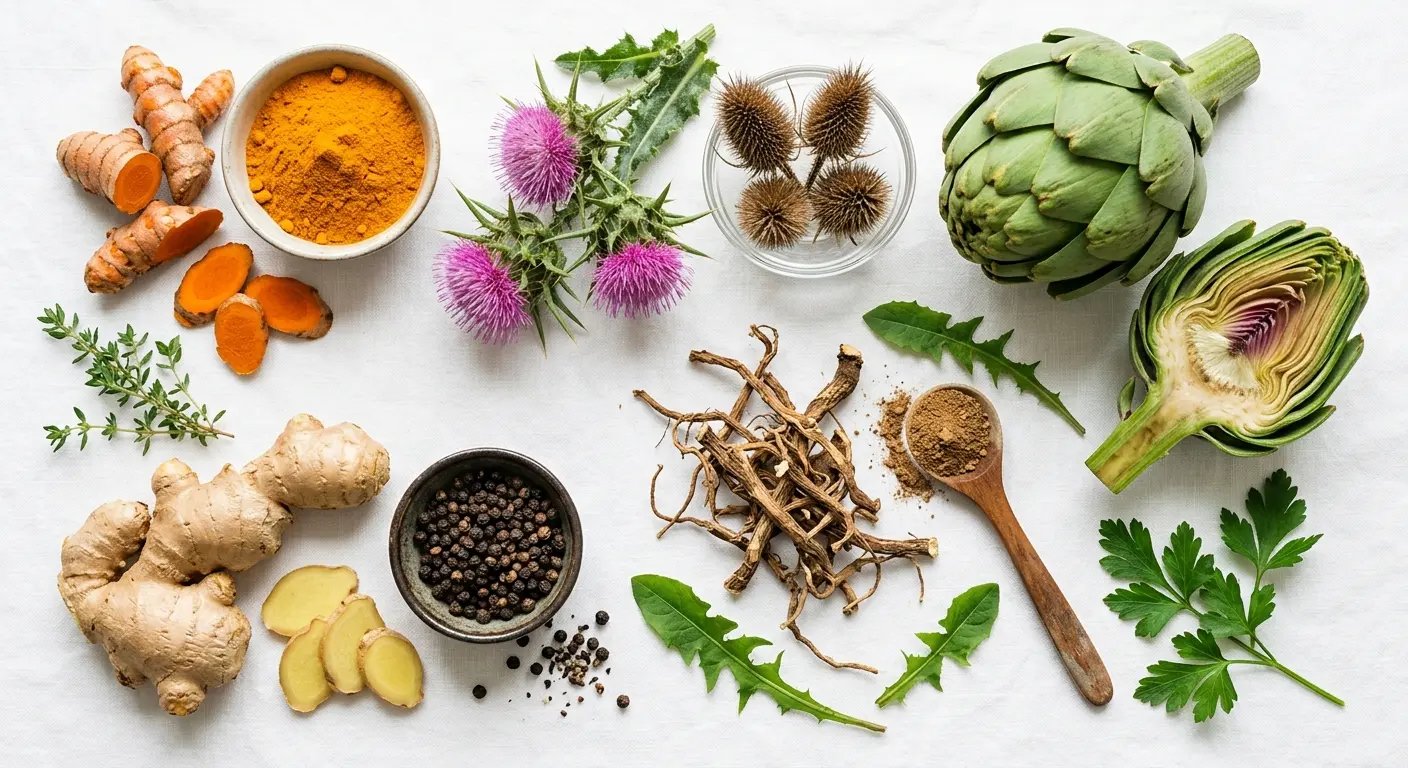

I've thoroughly examined the available liver supplements on the US market and made a simple observation: most products think too one-dimensionally.
They deliver a single active ingredient — usually milk thistle — in a dosage that often falls below the therapeutically meaningful level. Or they combine multiple ingredients without considering synergy and bioavailability.
hepavital by naturaveda is different — and has convinced me as a gastroenterologist.
 Why hepavital stands out:
 Seven synergistically active plant compounds — addresses all three root cause dimensions simultaneously300 mg turmeric powder — one of the highest dosages on the market200 mg L-Glycine — a direct glutathione precursor, rarely found in liver supplementsPiperine from black pepper — boosts curcumin bioavailability by up to 2,000%Standardized milk thistle seed extract — guarantees consistent silymarin content100% vegan, gluten-free, lactose-free — plant-based HPMC capsule, no gelatinNo fillers, no artificial additives — active ingredients only2 capsules daily — easily fits into any routine30-day money-back guarantee
The combination of turmeric + piperine is a scientifically proven synergy mechanism that hepavital leverages consistently. Curcumin alone has very low oral bioavailability — it's barely absorbed from the gut. Piperine solves this problem elegantly without burdening the body.
Equally well thought-out: L-Glycine as a glutathione precursor. Glutathione is the liver's master antioxidant — and it's often depleted under chronic liver stress. Rather than supplementing glutathione directly (which is poorly absorbed in the digestive tract), hepavital provides the amino acid from which the liver can synthesize glutathione itself.
This isn't marketing logic. This is biochemistry.
30-day money-back guarantee. Available only while supplies last.
Order hepavital now →Mike came back to my practice in Houston after eight weeks. The blood test results were on the table. ALT and GGT had noticeably dropped — not yet in the optimal range, but the trend was clear. And he said something that pleased me more as a physician than any lab number:
"I'm sleeping through the night again. And after lunch, I no longer need to lie down."
— Mike, Patient
That's exactly the goal.
If you're suffering from the symptoms described above, if your liver values are elevated, if you feel like your body is only running at half capacity — then I recommend trying a supplement that truly addresses liver health from multiple angles.
With hepavital by naturaveda, you finally have a product that addresses all three root causes simultaneously:
 Our Tip:
With the 30-day money-back guarantee, you can try hepavital completely risk-free. Most users report noticeable improvements after 4 to 8 weeks of consistent use.
30-day money-back guarantee. Ships directly to your door.
Order hepavital now →Stefan Brauer, MD, is a board-certified gastroenterologist with over 12 years of clinical experience based in Houston, TX. In his practice, he treats patients with liver conditions daily and is a strong advocate for evidence-based, holistic liver health.

